A Columbus firm that does one thing
PlainView Access makes medical practice websites, forms and documents usable by every patient, and puts the proof in writing.
Why the firm exists
Most medical practices do not have a web team. The site was built once, and office staff have kept it going since. Then a federal rule gave that site a technical standard and a date.
A practice administrator looking for help finds two kinds of offer. One is a widget: a script that adds a toolbar and leaves the pages, forms and PDFs as they were. The other is an audit: a long technical report that says what is wrong and leaves the repair to someone else. Neither one gets a practice to the standard.
PlainView Access was set up to do the whole job for a price a practice can approve without a committee. We test the site, repair it, sort out the documents, write down what was done and keep it that way. One firm, one fixed price, one person to call.
The name is the method. Everything we find, fix and charge is in plain view.
We measured before we started
Our own figures, from automated checks of public pages in November 2026.
Before taking a client, we scanned the websites of 116 Ohio medical practices: 682 pages and 444 PDFs.
110 of the 116 had at least one failure an automated check can detect. 91 had text too faint to meet the contrast standard. 66 had links a screen reader could announce only as “link.” Of the PDFs, 177 had no tags. And of the 28 sites that already ran an accessibility widget, all 28 still had failures.
We do not publish results for any named practice. Each practice can have its own, free. How the Snapshot works.
How we work
Plain language
Our reports say what is wrong, who it affects and what it takes to fix. An owner should be able to read one without a glossary.
Published prices
Every price is on this site. A larger site gets a fixed quote before any work begins. Nothing is billed by the hour.
People do the testing
Software finds some barriers quickly. It cannot tell whether a form can be completed by keyboard or whether an image description makes sense. A person checks.
Dated claims
We never call a site guaranteed or certified. We say which standard it met, how it was tested and on what date, and we hand over the report.
Repairs at the source
We fix the pages, forms and documents themselves. We do not install accessibility widgets, on your site or on ours.
The same rules for us
This site is held to the standard we test against. Our accessibility statement says how it was checked.
Three ways to approach the rule
What each one changes, and what it leaves for the practice to do.
| Question | A widget | An audit alone | PlainView Access |
|---|---|---|---|
| Are the pages themselves repaired? | No. A toolbar is added on top. | No. The report lists what to repair. | Yes |
| Are PDFs and forms dealt with? | No | Listed, not repaired | Yes. Each one is repaired, converted, archived or removed. |
| Does a person test the site? | No | Usually | Yes, by keyboard and screen reader |
| Is there a dated written record? | No | Yes, of the problems | Yes, of the problems, the repairs and the exceptions relied on |
| Who keeps it right afterward? | Nobody | The practice | We do, under a Care plan |
Our method and tools
- The standard: WCAG 2.1 Level AA, the one the federal rule names
- Automated checks: axe-core, an open-source rule engine
- Screen readers: NVDA on Windows and VoiceOver on Apple devices
- Keyboard-only testing of every template and patient task
- Zoom to 400% and phone-width testing
- Our own scanner, which reads public pages politely and identifies itself. How it behaves
Who we work with
- Independent medical practices, single-location and multi-location
- Specialty groups: eye care, orthopedics, ENT, audiology, oncology and others
- Community health centers
- Behavioral health and dental practices
- Ohio public entities under the parallel ADA Title II rule
Who is behind it
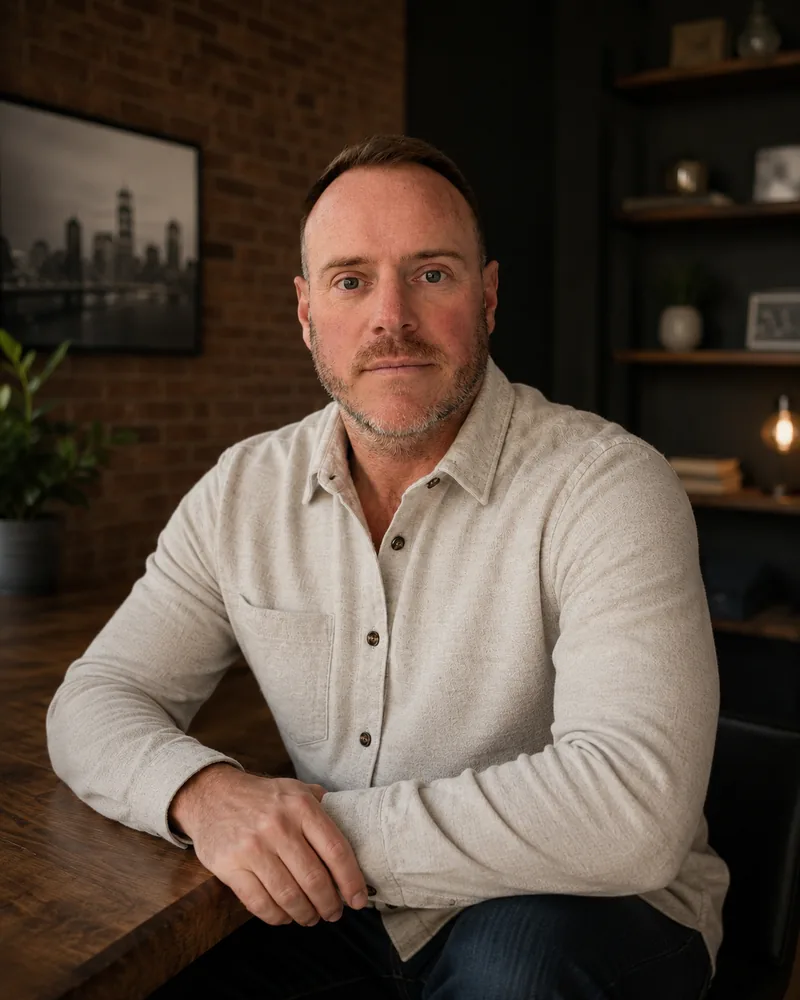
Mic Foster
Founder
Mic has spent 24 years starting and running businesses, seven in all, from hospitality and a membership athletic facility to an online marketplace.
Running them taught him what an owner wants from a vendor: a fixed price, a date and a straight answer. PlainView Access is built on those three things.
He founded Marquee & Co., a Columbus web studio that writes every site by hand instead of assembling it from templates. Its work includes a concierge medical practice, a youth sports nonprofit and businesses across Central Ohio. Every Marquee site is tested in a real browser at desktop and phone sizes before a client sees it. PlainView's testing grew out of that habit, and Marquee is the build studio behind every repair and rebuild we deliver.
PlainView Access began in 2026 with a question: how do Ohio practice websites measure up against the standard the federal rule names? The firm built a scanner, ran it across 116 practices and found failures on 110. The work since has been fixing that properly.
Mic leads every engagement. When you call, you reach him.
He lives in Bexley, Ohio, where he serves on the board of Bexley Youth Lacrosse.
Based in Columbus, working across Ohio
731 E Broad St, Columbus, OH 43205